
General OOH Content Guidelines & Restrictions
This is a general guide for content in digital OOH.
This guidance will evolve over time and is based on various sources including, but not limited to, media owner rules, industry guidance and previous campaign experience.
PLEASE NOTE: These guidelines are not exhaustive and may vary regionally and at short notice based on changing media owner agreements with landlords and government legislation. For the avoidance of doubt, all copy should be shared with media owners as early as possible to confirm that content can run. DOOH.com cannot be held responsible for any creative decisions made based on this information and will always defer to media owner input for a final say on what can run.
In general, we recommend being aware of the ASA’s Non-broadcast code guidelines.
As standard, media owners assume that all content has been reviewed by end-client legal teams in relation to ASA/CAP and other relevant guidelines. Note that ASA/CAP approval of content does not necessarily mean that content can run on all media owners and formats, as there might still be location-specific considerations (e.g., extra review points from TfL, proximity to schools, etc. - see below).
General Watch-outs
Media owners have the final say...
Ultimately, media owner teams will have final say on what can and cannot run on their inventory - whatever one's own opinions! As such, it's strongly recommended that content is provided as early as possible for media owner review.
Background elements
Be mindful of ALL elements within an ad, including the background/periphery.
Content can be rejected on the basis of incidental background elements that are unrelated to the brand, product or service (e.g., the inclusion of food - see below).
Licensing & fonts
Media owners assume that licenses are held for all images and fonts included within creatives. In principle, they can request proof of licensing and/or participation agreement of any depicted people (in particular celebrities/well-known personalities). If social media content is used, be aware that copyrighted images are often shared by users without permission.
TfL / National Rail / Malls
If any booked sites are part of TfL, National Rail or Shopping Mall estates, content will generally have additional review points, e.g. both media owner and TfL/Rail/Landlord copy review teams. This means that reviews and approvals can take longer than expected. As such:
- We strongly recommend that work-in-progress artwork is shared with the DOOH.com team well before the standard 5 working day lead time for final artwork in order to reduce the risk of late launches.
- The DOOH.com team will pass creative on to media owner teams and manage all communications around approvals and feedback.
- Reference link: TfL’s Advertising Policy
Language & Gestures
🚫 Cannot Run
-
Any swearing or offensive language. Note that obscured or implied swear words (e.g.,
f**k) are generally not allowed.
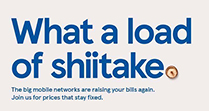
-
Any emojis that could be construed as offensive, have an alternative meaning or reference alcohol:
- 💥 👅 🍆 🍑 🌮 💦
- Any rude gestures (e.g., a middle finger). Note potential regional/international variations in acceptable gestures.
⚠️ Possible (Requires Media Owner Approval)
-
Plays or puns on milder profanity might be allowed but will require media owner review and approval.
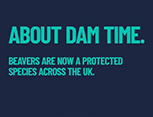
-
Language that specifically mentions an individual in a negative light to an excessive degree.
- Example: If a football player/manager makes a mistake during a match, "Oh no, Southgate!" is probably OK, but "You’re absolutely terrible Southgate, quit now" would not be.
🔍 Watch-outs
- Any emojis (due to alternative/suggestive meanings).
- Depictions of people displaying intense negative emotions (e.g., intense anger, offensive facial expressions) will be reviewed in terms of wider visual/brand context.
Violence & Anti-Social Behaviour
🚫 Cannot Run
- Any references to excessive violence, physical harm or blood.
- Any content that might encourage or facilitate anti-social behaviour (e.g., graffiti, aggressive gatherings, etc.).
- On public transport: any weapons pointed directly at viewers.
⚠️ Possible (Requires Media Owner Approval)
- Contextually relevant depictions of harm (e.g., domestic abuse charities).
- Contextually relevant depictions of weapons or military equipment (e.g., for military recruitment, films or video games).
- Weapons pointed away from viewers that are not the focal point of the artwork are more likely to be approved.
Sex, Nudity & Skin
🚫 Cannot Run
- Any depictions of nudity or references to sexual activity (including sexually provocative poses or gestures).
- Content promoting adult services (e.g., pornography or escort agencies).
⚠️ Possible (Requires Media Owner Approval)
- Semi-nudity/depictions of skin are assessed on a case-by-case basis.
- Areas of focus include any depictions of cleavage, underwear/lingerie or otherwise covered genitalia. See an example below of a requested change to make exposed cleavage less noticeable (left rejected, right accepted):
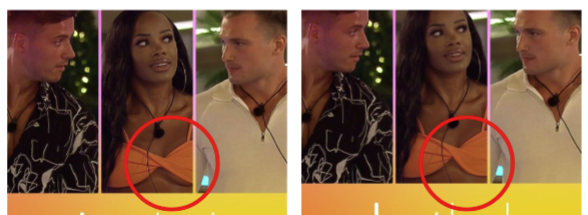
- Skin restrictions are often linked to proximities to specific demographic areas; checks against booked site lists can be made to identify these restrictions. There are a limited number of areas and screens where any level of exposed skin will be rejected, e.g. even the below:
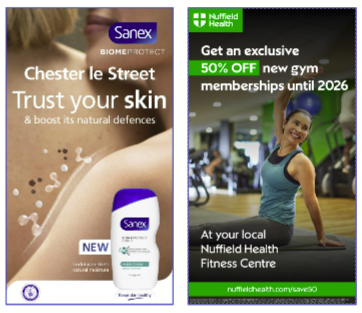
- Note: Even if only a small number of screens are affected by skin sensitivity limitations, alternative artwork will be required for those sites.
Public Health & Safety
Distractions & Medical Impacts
- Digital OOH animation levels: Digital OOH screens allow for different levels of animation depending on their location (e.g., roadside vs. a pedestrianised or mall environment) because movement can distract drivers or the public.
- Most media owners categorize animation into three levels: Static, Subtle and Full.
- Subtle motion content will generally need to be approved by media owners before running. See here for some examples of subtle motion
⚠️ Possible (Requires Media Owner Approval)
- Rapid flashing on-screen (this might require a Harding test to check for photosensitive epilepsy triggers). A Harding test can be completed online here (note: incurs a cost).
- Medical products (e.g., Viagra).
- Unrealistic body image campaigns (e.g., "Beach Body Ready" style ads).
HFSS (High Fat, Salt, Sugar)
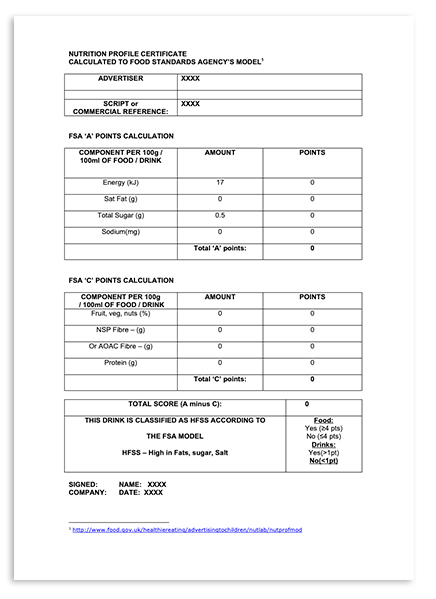
HFSS (High Fat, Salt, Sugar) is a government categorisation to identify unhealthy foods (mainly in the context of combating childhood obesity). A food product is categorised as HFSS by scoring it based on its ingredients; if a specific score threshold is exceeded, it will be classed as HFSS.
The scoring is documented within a specific form called a Nutrient profiling model (NPM) certificate. See here for more details. End clients are responsible for providing NPM forms for food products.
See example below of an NPM form template and generally what media owners will expect for submission to prove non-HFSS (or HFSS) status:
🚫 HFSS restricted sites
- Certain OOH screens carry restrictions that do not allow display of any HFSS food products, e.g. due to close proximity to schools.
⚠️ Non-HFSS products on HFSS restricted sites
-
Even non-HFSS products - apart from obviously depicted fresh produce (fruits and vegetables) - will need an NPM certificate to prove non-HFSS status in order to run on HFSS restricted sites.
-
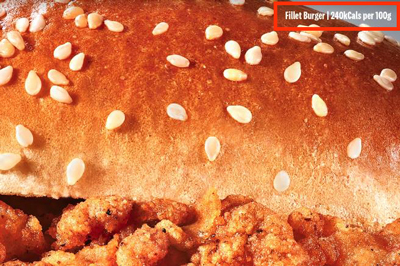
Non-HFSS products will also need a visible product descriptor within the artwork that clearly identifies that product as it is named in its NPM certificate - see example below. This is to prove that the product included in the ad is covered by the relevant NPM certificate. Guidance on 'clear' can vary but a rule of thumb is being legible at a 2 metre distance from screen - proposed layouts should be shared with media owners for review as early as possible to avoid any late rejections.
- Whether or not a site is restricted is defined by the media owners; this can be determined once the specific sites of a campaign are booked in.
LHF (Less Healthy Food)
-
The government’s recent LHF ("Less Healthy Food") guidelines DO NOT apply to OOH. LHF rules only apply to TV broadcast and online advertising.
-
A food product that is not classed as LHF might still be HFSS (based on its NPM score) and so still rejected by media owners to run on HFSS restricted sites.
🔍 Watch-outs
-
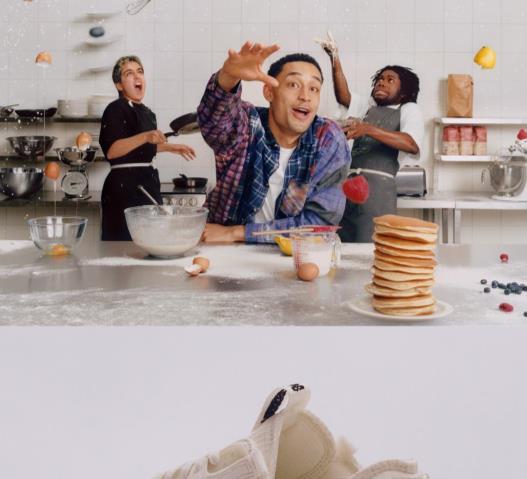
Any reference to food - even if entirely incidental to the main ad creative - can trigger HFSS rules.
-
In our experience, it is very difficult to provide NPM certificates for incidental food, as this requires proving that non-branded/generic food meets a specific health profile. Generally, instances of incidental food on HFSS-restricted sites will be rejected and cannot run.
Alcohol, Smoking & Vaping
🚫 Cannot Run
- Any references to cigarettes or smoking.
⚠️ Possible (Requires Media Owner Approval)
- Many screens have restrictions about referencing alcoholic beverages (whether or not brand-related). In general, any references to alcohol will require media owner approval and may cause potential delays to publishing.
- Alcohol restrictions are often linked to school proximities (e.g., within 100m or 200m). Checks against booked site lists can be made to identify these restrictions.
- Advertising restrictions on e-cigarettes and vaping have only recently come into effect and there are many grey areas; we strongly recommend not referencing any e-cigarettes or vaping in your creative.
Drugs (Illicit or Prescription)
🚫 Cannot Run
- Any reference to prescriptions (if not specifically brand-related) or illicit drugs, even if entirely incidental.
Gambling
⚠️ Possible (Requires Media Owner Approval)
-
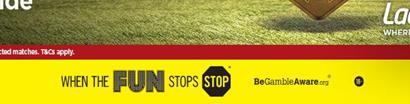
Advertising of gambling services is permitted, although it must always include a clearly visible health disclaimer/banner.
🔍 Watch-outs
- More recently, there has been pushback on inclusion of celebrities/notable personalities in gambling ads who might have a young (i.e. sub-18) following
Product Claims
🚫 Cannot Run
- Any ads that mislead consumers into thinking a product or service offers something that in reality it does not.
⚠️ Possible (Requires Media Owner Approval)
- Occasionally, media owners might query whether any product claims stated in the ad are sufficiently qualified within the T&Cs. This has recently become more common on TfL sites (namely London Underground)
- Media owners might advise that artwork with insufficiently substantiated claims run "at risk". This means that it might be pulled without warning if the media owner receives a complaint from the public and/or the ASA; unless alternative artwork is on file, this would mean lost media space.
Environmental Concerns
⚠️ Possible (Requires Media Owner Approval)
-
A small number of councils (e.g., Bristol, Edinburgh) place restrictions on any content related to fossil fuel industries.
-
More widely (and specifically on TfL), media owners have started to request substantiation of any environmental claims, e.g. around green ways of working. This follows recent guidance from the ASA and CAP code:
If you are considering making environmental claims in advertising, do read our advice and resources at www.asa.org.uk/environment to ensure ads stay within the rules. Environmental claims must not mislead and ads in general must not be socially irresponsible. Advertisers have to be able to substantiate any green claims made with suitably robust evidence and shouldn’t encourage consumers to be harmful to the environment. If advertisers do make environmental claims in their advertising, they can’t just use them to be seen to be green, they have to actually be green.
Political References
🚫 Cannot Run
- Negativity or criticism directed towards the UK government (departments, agencies, etc.).
- Any ads in support of or against a specific political party, political movement, religion, cultural group, etc.
- Any reference to international relations, diplomacy, or conflicts, contemporary or historical (e.g., Ukraine-Russia war, Middle Eastern conflicts, World War Two).
⚠️ Possible (Requires Media Owner Approval)
-
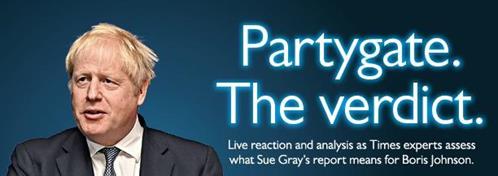
Political commentary (e.g., ads referencing political events or individuals).
-
Any visual references to UK government buildings.
Other Commercial Sensitivities
🚫 Cannot Run
-
Any content that could cause reputational damage to the media owners, landlords, local businesses, or brands.
-
On TfL estate, any negative references to TfL transportation (e.g. delays, strikes or cancellations). Similarly, or any screens in or near railway stations: any negative references to National Rail and/or rail travel in general
-
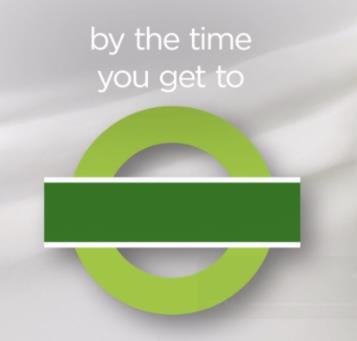
Any content that implies endorsement by a transport provider or landlord without express permission (e.g., artwork that references or mimics the TfL brand):
-
Any reference to a competitor media owner.
⚠️ Possible (Requires Media Owner Approval)
-
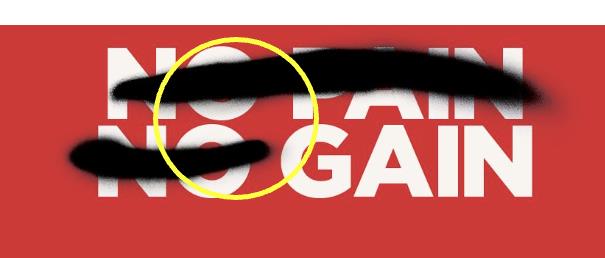
Any content that suggests an OOH screen might be broken, malfunctioning, or vandalised. This includes creative designed to give the impression that the screen has been subject to graffiti or has shattered (example below).
-
Note: In our experience, TfL sites are the strictest on this rule. Even small crack or glitch effects within artwork are likely to be rejected.
-
There might be queries around certain brands running alongside competitor brands/ads. This is generally accounted for at campaign planning/booking stages but not always.
-
Occasionally, there might be site-specific content restrictions due to local commercial sensitivities, e.g. Ocean Outdoor's Screen at Carnaby Street cannot run depictions of airlines/aviation.
🔍 Watch-outs
- Media owners will generally assume that included images are fully licensed and/or there is full permission to use them (especially in the case of social media content). In principle, there could be requests for proof of licensing/ownership, although this is rare.
Local Cultural Sensitivities
🔍 Watch-outs
- There might be instances where content appropriate for one geographic region is less appropriate for another.
- Sports teams & local support: (e.g., referencing the England team in Scotland, Wales, Republic of Ireland, or Northern Ireland).
- Historical events: (e.g., referencing the Hillsborough disaster in Liverpool).